Submit a scene. The network slices it into tiles, renders them across consumer GPUs worldwide, and proves every frame it hands back. No cluster to provision. No queue to sit in.
A render farm is a terrible thing to own: idle most of the year, obsolete in three, and you pay for all of it. LUMEN turns the same work into a metered utility drawn from GPUs that were going to be idle anyway.
Send a scene or a job spec with a quality tier and a ceiling on spend. Tiles are handed out in seconds — not queued behind another studio's deadline.
Every node runs the same deterministic kernel, so the same tile seeded the same way produces the same pixels on a 3080 as on a 5090.
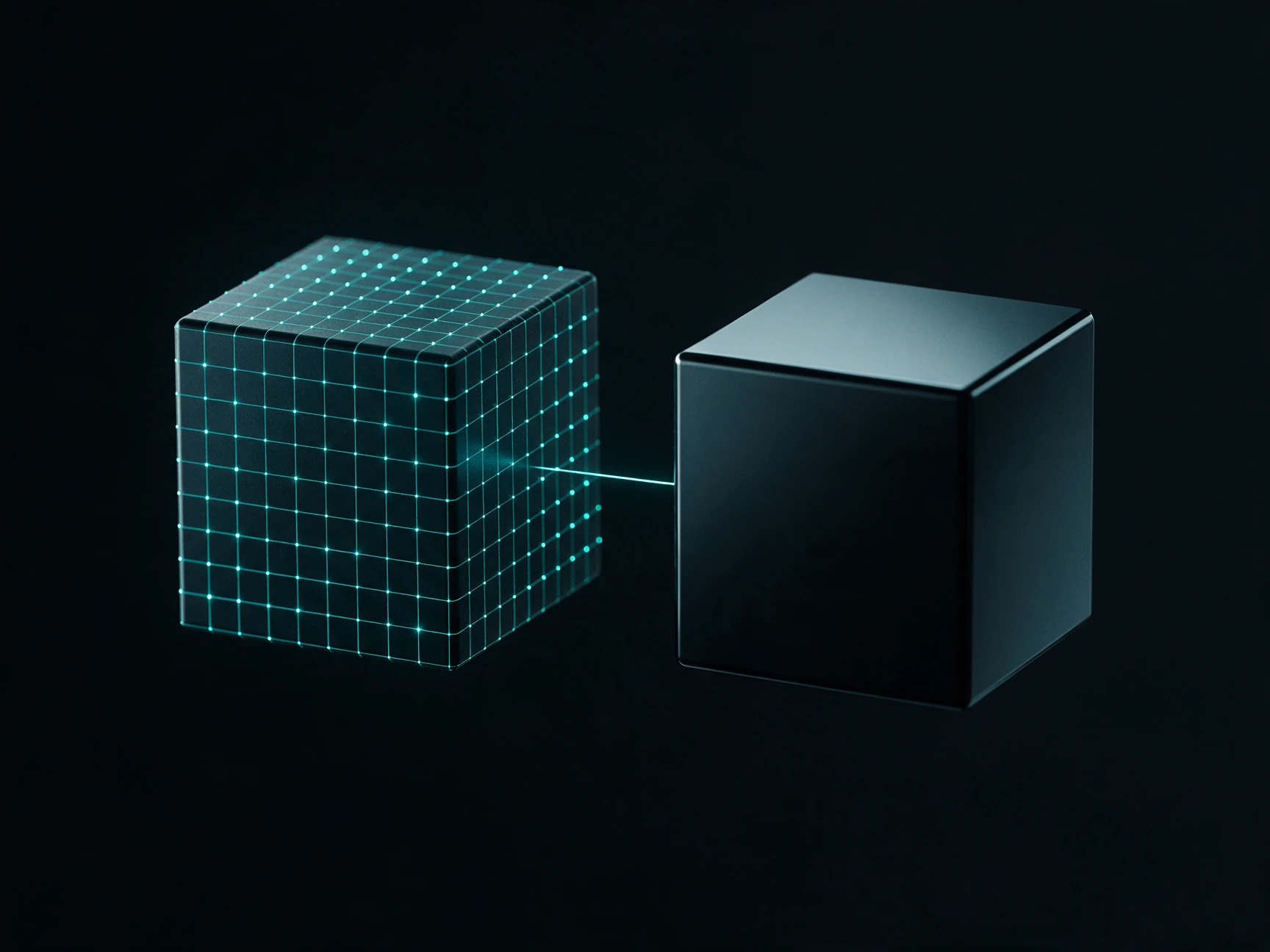
Proof-of-Render re-renders random tiles on a second node and compares the result. A tile that cannot be reproduced is never paid for.

Every figure below is read from the network API on this page load — not typed into a template.
Upload the scene, choose a quality tier, set a spend ceiling. Nothing to install and no node to configure.
The scheduler cuts the job into tiles and assigns each one by available VRAM, capability tier and current load across the network.
Verified tiles are paid in LUMEN the moment they land. Anything that fails verification is re-queued and the node loses its stake.
Automotive, product, architecture, character, material and simulation work rendered on the network.


Render fees burn LUMEN. Verified work mints it. Supply is a function of how much the network actually renders, not of a release schedule.